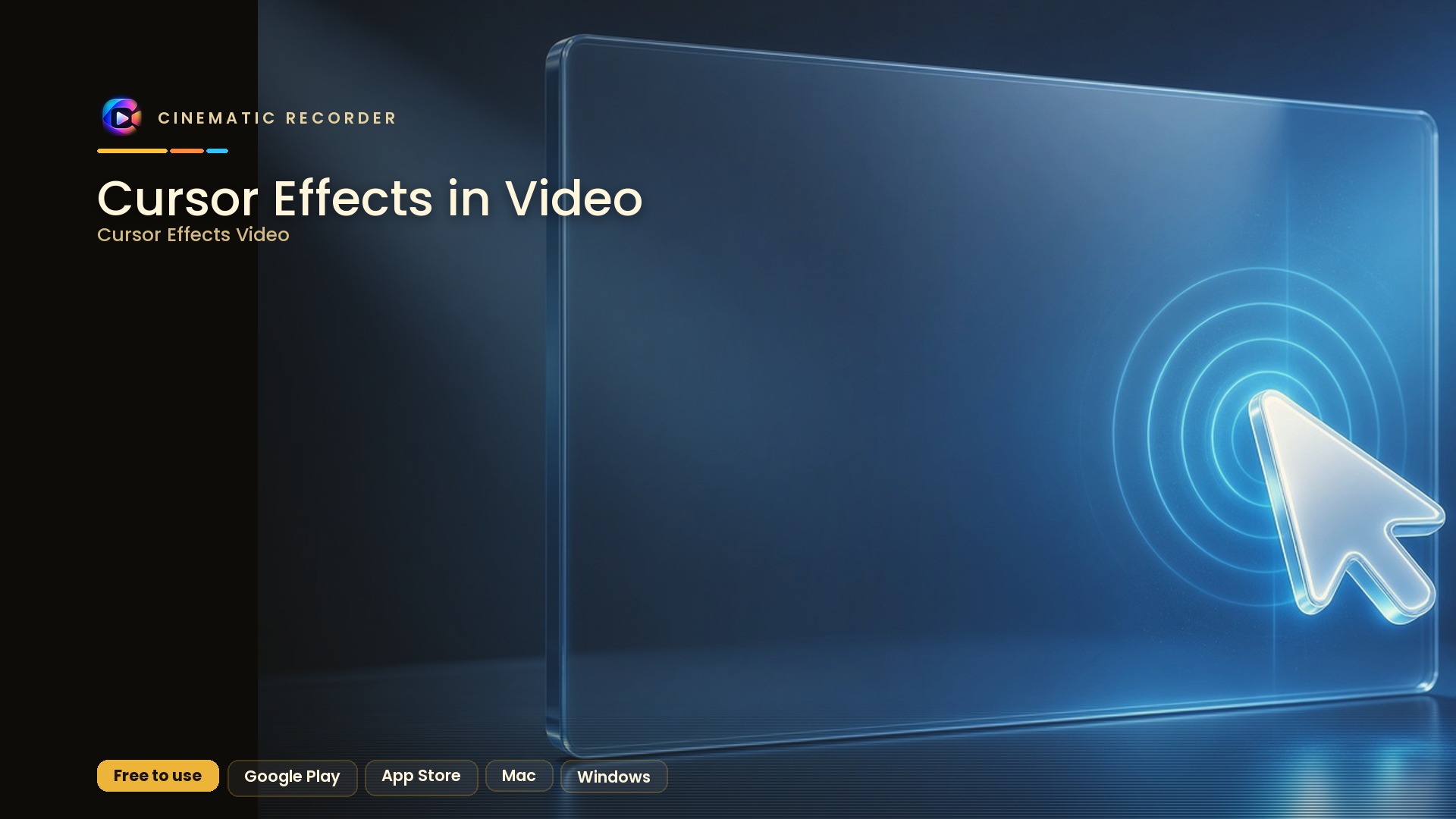
Have you ever watched a phone tutorial and thought, "Wait, what did they just tap?" That confusion is one of the most common problems in screen recordings. On a computer there is a mouse pointer; on a phone, your finger is invisible to the viewer. Cursor effects in video solve this by showing exactly where each action happens.
This guide explains the main cursor effects — smoothing, click animations and spotlight — why they work, and how to use them without overdoing it.
The invisible tap problem
When you record your phone screen, the video shows the result of your taps but not the taps themselves. A menu suddenly opens. A toggle suddenly switches. The viewer sees the change only after it happens and has to guess what caused it.
Some phones offer a developer option to "show taps", which draws a small dot. It helps, but the dot is tiny, it jumps instantly and it often appears in every recording whether you want it or not. Editing-based cursor effects give you more control and look far cleaner.
Effect 1: cursor smoothing
Real finger movement is jerky. Taps jump from one corner to another, and if a pointer is drawn directly from that data, it teleports around the screen. Cursor smoothing creates a gentle path between actions so the pointer glides from one spot to the next.
Why it helps: the viewer's eye follows the moving pointer naturally, so they already know where the next tap will land. Smooth motion also matches smooth zooms; together they create the calm, guided feeling described in what makes a screen recording cinematic.
Keep smoothing moderate
Too much smoothing makes the pointer lag behind the action, so the button reacts before the pointer arrives. Aim for a pointer that feels fluid but still lands on time.
Effect 2: click and tap animations
A click animation is a short visual pulse — a ripple, ring or glow — at the exact spot of a tap. It answers the viewer's question "what was tapped?" in a fraction of a second.
- Use a ripple or ring for normal taps.
- Keep it short. The animation should finish before the screen changes too much.
- Pick a colour that contrasts with your app. A bright ring disappears on a bright background.
Click animations work especially well with auto zoom: the frame moves to the tap, and the ripple confirms the action. Learn more in auto zoom explained.
Effect 3: cursor spotlight
A spotlight places a soft bright circle around the pointer and slightly darkens the rest of the screen. It is useful when the screen is busy — a settings page full of options, a spreadsheet, or a shop dashboard — and the viewer needs to know which of many items you mean.
Use the spotlight for short moments, not the whole video. A constant spotlight becomes tiring and hides context. For more ways to guide attention, see focus, spotlight and dimming effects.
When cursor effects help most
| Video type | Most useful effect |
|---|---|
| App tutorial or how-to | Click animations + smoothing |
| Product demo for customers | Smoothing + occasional spotlight |
| Busy dashboards or forms | Spotlight on key fields |
| Fast app review | Light click animations only |
| Mobile game clips | Usually none — they distract from gameplay |
How to set up cursor effects step by step
- Record your screen as usual, tapping slowly and clearly.
- Open the project in the editor and turn on cursor smoothing first.
- Add click animations and preview a few taps to check timing and colour.
- Add a spotlight only to the two or three moments where the screen is crowded.
- Watch the whole video once and remove effects on any accidental taps.
This order matters: smoothing sets the base motion, and the other effects sit on top of it. Adding everything at once makes it hard to see which effect is helping.
Common mistakes with cursor effects
- Using every effect at once. Ripple, glow, trail and spotlight together look noisy. Pick one or two.
- Effects on stray taps. If you tapped by accident, remove that moment or its effect.
- Huge pointers. A pointer that covers the button defeats the purpose.
- Effects that hide private data. Or worse, effects that draw attention to it. Check your screen before recording with the privacy checklist before you record.
Cursor effects in Cinematic Recorder
Cinematic Recorder includes cursor smoothing, cursor spotlight and click animations in its phone editor. They are applied as non-destructive edits, so you can try a style, change it or turn it off without touching the original recording. You can combine them with auto zoom and focus highlight for a fully guided demo. See the smart cursor features for details.
FAQ
Do I need a mouse to use cursor effects on Android?
No. The effects are built from your touch taps, so you can record with your finger as usual and still get a visible pointer and tap animations in the edited video.
Should I turn on "show taps" in developer options as well?
Usually not. If you add click animations in the editor, the system dots become extra clutter. Use one method, not both.
Are cursor effects good for short vertical videos?
Yes, in moderation. Clear tap animations help in fast Reels and Shorts, but keep them short so the video stays snappy.
Can I remove cursor effects after exporting?
Not from the exported file, but in Cinematic Recorder the project keeps your original recording, so you can open it again, remove the effects and export a new version.
Good cursor effects are almost invisible as effects — viewers just feel that the video is easy to follow. Start with smoothing and simple tap ripples, and add a spotlight only where the screen gets crowded.
Related features